Match your microphone to your room, voice, and use case before you match it to a brand.
Microphone recommendations are reviewed against current catalog pricing and recent launches from Shure, RØDE, Logitech, Elgato, HyperX, and Razer.
The best microphone for you depends more on your recording environment and workflow than on specs alone. A dynamic mic in an untreated room beats a studio condenser in the same space. Hybrid XLR/USB mics offer the most flexibility; pure USB mics keep things simple.
Welcome to The Tech Showdown's buyer's guide to the best microphones of 2026. We've spent the year synthesizing the leading independent lab data and verified owner reviews for every flagship in the category — weighing battery life, build quality, sound, performance, and real-world day-to-day livability — to bring you the honest, no-hype recommendations below.
This guide is built around three picks: the best overall microphones that we'd hand to most readers, the best budget option for value-focused shoppers, and the best premium pick for buyers who want every feature and don't mind paying for it. We update this page as new microphones launch and as long-term reliability data comes in.
The Shure SM7B earns our top spot for 2026 with a 4.8/5 score driven by If audio quality is your priority, Shure SM7B delivers where budget alternatives fall short on clarity.. At $0.00, it's not the cheapest pick — but it's the one we'd hand to a friend or family member without hesitation.
If price-to-performance is your priority, the Shure MV7+ at $0.00 delivers more value than anything else in the category. The Dynamic capsule on Shure MV7+ gives professional podcasters and streamers the Cardioid pickup they need.
When budget is no object, the Shure MV7+ is the no-compromise flagship pick at $0.00. The Dynamic capsule on Shure MV7+ gives professional podcasters and streamers the Cardioid pickup they need.
1.Notebookcheck is the primary source for sustained CPU/GPU benchmarks and thermal-throttling behavior.
2.Display measurements (color accuracy, peak brightness, HDR coverage) are taken from Notebookcheck and DisplayMate where published.
3.Battery-life numbers come from Notebookcheck's standardized Wi-Fi browsing and video-playback tests.
4.Long-term reliability and keyboard feel are weighed against r/laptops, r/macbook, and Ars Technica long-term reviews.
5.We use the current MacBook Pro and MacBook Air as the productivity-laptop reference points.
What to Look For
✓Battery life — 12+ real hours is the floor for a premium laptop in 2026.
✓Display quality: at least 100% sRGB, 400+ nits brightness, and a 120Hz refresh rate are now table-stakes for the premium tier.
✓Sustained CPU/GPU performance, not just peak benchmarks. Look for 30-minute test results.
✓Port selection: at least one Thunderbolt/USB4, ideally two, plus HDMI or full-size SD if you offload media.
✓Repairability and parts availability — check the manufacturer's 5-year support commitment.
✓Trackpad and keyboard feel: spend 10 minutes typing in-store before you commit.
Buying factors
What matters most for microphones
Dynamic vs condenser: dynamic mics reject room noise (ideal for untreated rooms). Condenser mics capture more detail and brightness (ideal for treated studios).
XLR vs USB: USB is plug-and-play. XLR requires an audio interface but gives more control and upgrade options. Hybrid mics offer both.
Polar pattern: cardioid picks up sound from the front — safest for solo creators. Bidirectional for interviews. Omnidirectional for room capture.
Room acoustics: a $50 dynamic in a treated room sounds better than a $400 condenser in a bare room. Prioritize acoustic panels and mic placement.
Software: Shure MOTIV, Blue VO!CE, Elgato Wave Link, and Razer Synapse offer different levels of DSP, EQ, and mixing — factor this into your choice.
Price bands
What each budget range buys
Budget (under $100)
$50 - $100
Expect USB or XLR/USB hybrid, dynamic or condenser capsules, basic gain/volume controls, and decent sound for podcasting and streaming.
Expect broadcast-grade capsules, built-in audio interfaces, advanced DSP, all-metal construction, and professional XLR/USB hybrid designs that last decades.
~$185.90 · Amazon price as of Nov 2, 2026, 6:10 AM UTCAmazon price and availability details
Product prices and availability are accurate as of the date/time indicated and are subject to change. Any price and availability information displayed on Amazon.com at the time of purchase will apply to the purchase of this product.
USB is fine for solo podcasting. XLR is better if you host guests in person, use an external mixer, or want to upgrade individual components over time. Hybrid mics give you a USB starting point with XLR for later.
Do I need a Cloudlifter for the Shure SM7B?▼
Most entry-level audio interfaces cannot drive the SM7B cleanly without a Cloudlifter or inline preamp ($100-150 extra). Budget for this if you choose the SM7B.
How important is sample rate for microphones?▼
48kHz/24-bit is standard and good enough for spoken word. 96kHz/24-bit is useful for music recording and post-production flexibility. The mic capsule and room treatment matter far more than the number.
Should I get a boom arm or desk stand?▼
A boom arm positions the mic closer to your mouth and off your desk, reducing room noise and keyboard pickup significantly. It is the single best upgrade you can make after buying a decent mic.
What are the best microphones of 2026?▼
Our top pick is the Shure SM7B (4.8/5, $0.00). For value, the Shure MV7+ at $0.00 is hard to beat. If you want the ultimate flagship experience, go with the Shure MV7+ ($0.00).
How much should I spend on microphones in 2026?▼
For the microphones category, the sweet spot is right around $0.00 — that's where you stop paying for marketing and start paying for the engineering that actually matters. Below that you'll start to see compromises in build quality, battery life, or feature breadth.
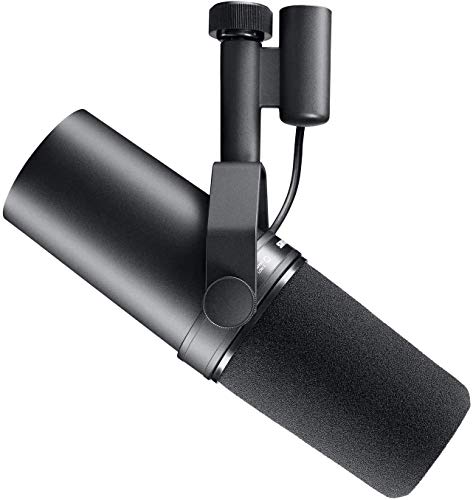 Shure SM7B
