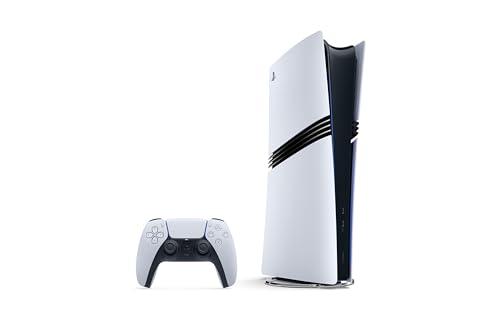
PS5 wins for exclusives. Xbox wins for Game Pass. Switch 2 wins for families. Start with the console that has your games, then compare hardware.
Gaming console picks are reviewed against current console pricing, PS5 Pro positioning, Game Pass value, Nintendo Switch 2 availability, and storage/accessory costs.
PS5 Slim ($449) is the best all-around console for Sony exclusives and DualSense features. Xbox Series X ($499) is strongest for Game Pass subscribers and backward compatibility. Switch 2 ($399) is the family pick for Nintendo games and portable play. The right console is the one with the games you actually want to play.
Welcome to The Tech Showdown's buyer's guide to the best gaming consoles of 2026. We've spent the year synthesizing the leading independent lab data and verified owner reviews for every flagship in the category — weighing battery life, build quality, sound, performance, and real-world day-to-day livability — to bring you the honest, no-hype recommendations below.
This guide is built around three picks: the best overall gaming consoles that we'd hand to most readers, the best budget option for value-focused shoppers, and the best premium pick for buyers who want every feature and don't mind paying for it. We update this page as new gaming consoles launch and as long-term reliability data comes in.
The Nintendo Switch OLED earns our top spot for 2026 with a 4.8/5 score driven by Nintendo Switch OLED uses oled handheld display to deliver what oled switch handheld sessions actually care about — games, not teraflops.. At $0.00, it's not the cheapest pick — but it's the one we'd hand to a friend or family member without hesitation.
If price-to-performance is your priority, the Sony PlayStation 5 Pro at $0.00 delivers more value than anything else in the category. The PlayStation 5 ecosystem on Sony PlayStation 5 Pro defines the game library — premium ps5 performance get access to exclusives, subscriptions, and cross-play titles that matter most.
When budget is no object, the Sony PlayStation 5 Pro is the no-compromise flagship pick at $0.00. The PlayStation 5 ecosystem on Sony PlayStation 5 Pro defines the game library — premium ps5 performance get access to exclusives, subscriptions, and cross-play titles that matter most.
1.Notebookcheck is the primary source for sustained CPU/GPU benchmarks and thermal-throttling behavior.
2.Display measurements (color accuracy, peak brightness, HDR coverage) are taken from Notebookcheck and DisplayMate where published.
3.Battery-life numbers come from Notebookcheck's standardized Wi-Fi browsing and video-playback tests.
4.Long-term reliability and keyboard feel are weighed against r/laptops, r/macbook, and Ars Technica long-term reviews.
5.We use the current MacBook Pro and MacBook Air as the productivity-laptop reference points.
What to Look For
✓Battery life — 12+ real hours is the floor for a premium laptop in 2026.
✓Display quality: at least 100% sRGB, 400+ nits brightness, and a 120Hz refresh rate are now table-stakes for the premium tier.
✓Sustained CPU/GPU performance, not just peak benchmarks. Look for 30-minute test results.
✓Port selection: at least one Thunderbolt/USB4, ideally two, plus HDMI or full-size SD if you offload media.
✓Repairability and parts availability — check the manufacturer's 5-year support commitment.
✓Trackpad and keyboard feel: spend 10 minutes typing in-store before you commit.
Buying factors
What matters most for gaming consoles
Game library should decide the platform before hardware specs: compare PlayStation exclusives, Game Pass, Nintendo first-party games, and where friends play.
Disc support matters if you buy used games, borrow games, collect physical editions, or want Blu-ray playback.
Storage fills quickly, so consider expansion costs before treating a cheaper digital console as the automatic value winner.
Families should weigh local multiplayer, parental controls, controller durability, and software costs as part of the console price.
Performance modes matter most on 4K/120Hz TVs; casual players on older TVs may not feel the difference between standard and premium hardware.
Price bands
What each budget range buys
Budget and second-room consoles
Under $300
Best for kids, handheld-only Nintendo play, secondary rooms, or Game Pass access without premium 4K expectations.
Mainstream consoles
$350-$550
The strongest range for PS5 Slim, Xbox Series X/S, and Nintendo Switch 2 depending on library fit.
Premium console setups
$600+
Pay this for PS5 Pro hardware, extra controllers, expanded storage, premium subscriptions, or bundles.
Buy PS5 for Sony exclusives and DualSense features, Xbox for Game Pass and backward compatibility, and Switch 2 for Nintendo exclusives, local multiplayer, and portable play.
Is PS5 Pro worth it?▼
PS5 Pro is worth it for players with strong 4K TVs who care about enhanced modes and smoother performance. Most casual buyers should start with PS5 Slim Disc Edition.
Is Xbox Series S still a good value?▼
Xbox Series S is a good value for digital-first Game Pass buyers, bedrooms, and families. Series X is better for 4K TVs, discs, and maximum performance.
What are the best gaming consoles of 2026?▼
Our top pick is the Nintendo Switch OLED (4.8/5, $0.00). For value, the Sony PlayStation 5 Pro at $0.00 is hard to beat. If you want the ultimate flagship experience, go with the Sony PlayStation 5 Pro ($0.00).
How much should I spend on gaming consoles in 2026?▼
For the gaming consoles category, the sweet spot is right around $0.00 — that's where you stop paying for marketing and start paying for the engineering that actually matters. Below that you'll start to see compromises in build quality, battery life, or feature breadth.
Are flagship gaming consoles worth the premium over mid-range?▼
For most buyers, yes — but only if you'll use the headline features. Flagship gaming consoles differentiate themselves through long-term reliability, faster software updates, and the kind of polish you only notice after months of daily use. If your daily routine doesn't lean on the premium features, mid-range options are perfectly capable.
 Nintendo Switch OLED